
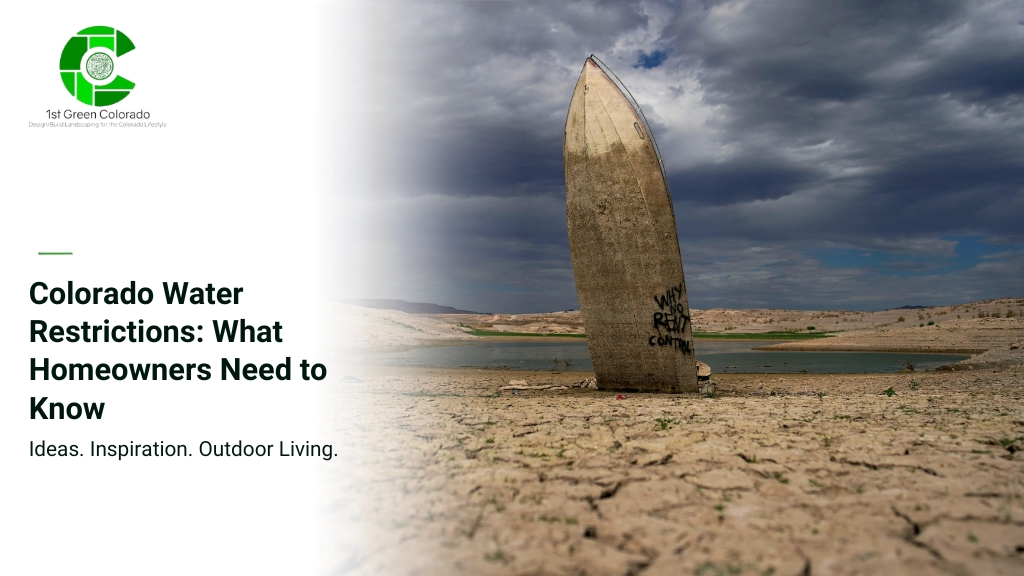
If you’ve noticed watering schedules changing, heard your neighbours talking about drought restrictions, or wondered whether you can still run your sprinklers, you’re not alone. Colorado’s unusually dry 2026 has made outdoor water use a much bigger concern for homeowners across the state.
But there is an important distinction to understand: water restrictions in Colorado are not one statewide rule that applies to every property. Requirements can vary by water provider, municipality, and drought stage.
As a homeowner, you might have questions like: What can I water, when can I water it, and how can I keep my landscape healthy without wasting water, etc., right?
This guide explains what the current restrictions mean, how they can affect your landscape, and what you can do to build a more water-wise outdoor space.
Key Takeaways
- Colorado does not have one set of outdoor watering rules for every homeowner. Restrictions depend on your local water provider.
- Denver Water is currently under Stage 1 drought restrictions and requires customers to follow a two-day-per-week watering schedule through September 30, 2026.
- Beginning October 1, Denver Water will prohibit watering grass and using spray irrigation until further notice, subject to specific exceptions.
- Water restrictions make efficient irrigation, native plants, mulch, and water-wise landscape design increasingly important.
- Homeowners should check their own water provider before changing their irrigation schedule because rules differ across Colorado.
- Across the Front Range, restrictions and drought responses currently vary between communities in Douglas, Adams, Weld, Larimer, Boulder, and Jefferson counties. Checking the water provider listed on your utility bill is therefore more useful than relying on your county or mailing address alone.
Is Colorado on Water Restrictions Right Now?
This is probably the first question most homeowners have.
Colorado does not currently have one statewide outdoor watering restriction that applies to every homeowner in the same way. Water providers and local governments can establish their own drought stages, watering schedules, and conservation requirements based on local water supplies and conditions. Jefferson County, for example, has noted that several municipalities within the county have implemented restrictions while the county itself does not operate water utilities.
However, restrictions are currently active in several Colorado communities.
What Are the Current Water Restriction Updates Across the Front Range?
The situation varies by county and, in many cases, by individual water provider. Here’s a snapshot of the current updates homeowners should be aware of:
| County | Current Update |
| Douglas County | Parker Water & Sanitation District recommends watering no more than three days per week and avoiding irrigation between 10 a.m. and 6 p.m. Highlands Ranch Water is currently reporting Stage 1 drought restrictions, with irrigation limited to two days per week. |
| Adams County | Westminster has active water-conservation guidance, while Northglenn has mandatory drought restrictions that can limit watering based on the current drought stage. |
| Weld County | Evans has seasonal outdoor watering restrictions and offers several water-conservation programs. Greeley and Windsor also provide irrigation-efficiency resources and water-saving programs. |
| Larimer County | Fort Collins provides residential water-conservation programs, rebates, and landscape guidance. Homeowners should check their specific water provider for current watering requirements. |
| Boulder County | Longmont is currently under a mild drought response and is asking residents to reduce water use voluntarily. Lafayette is at Drought Stage 1 and is asking residents to reduce outdoor watering to two days per week. |
| Jefferson County | Arvada and Golden currently identify Stage 1 drought restrictions and offer additional water-conservation resources. Westminster also crosses into Jefferson County and has its own conservation guidance. |
These conditions can change during the fall and winter as drought stages, water supplies, and local policies are reviewed. If you’re planning a landscape project, verify the current rules with the water provider serving the property before making decisions about irrigation or turf.
Denver Water’s Current Restrictions
As of September 2026, Denver Water remains under a Stage 1 drought declaration. Customers are being asked to reduce overall water use by at least 20%, and mandatory outdoor watering is limited to two assigned days per week through September 30. Watering is permitted only before 10 a.m. or after 6 p.m.
Denver Water’s amended drought resolution also introduces a significant change beginning October 1, 2026: watering of grass will be prohibited, and spray irrigation systems cannot be used for lawn watering unless an approved exception applies.
That means a homeowner in Denver or a property served by Denver Water cannot simply follow a generic Colorado watering calendar. Your specific water provider’s rules matter.
For homeowners outside Denver, the same principle applies. A property in Parker, Highlands Ranch, Northglenn, Lafayette, Arvada, Golden, Longmont, or Evans may have different watering requirements even though all are part of the broader Front Range.
Important: If you’re unsure which restrictions apply to your property, check your water provider’s current rules before turning on your irrigation system. Restrictions can change as drought conditions, weather, and water supplies change.
Why Are Water Restrictions Becoming More Important in Colorado?
Colorado’s water supply is closely tied to snowpack, runoff, and seasonal precipitation. With prolonged dry conditions and growing pressure on available water supplies, outdoor water use has become an increasingly important part of the conversation.
This means landscaping decisions need to look beyond how a yard appears in summer. A landscape that depends heavily on irrigation can become harder and more expensive to maintain when water availability is limited.
This is where thoughtful landscape design makes a difference. Choosing plants suited to Colorado’s climate, grouping plants according to their water needs, improving irrigation efficiency, and reducing unnecessary turf can help create a landscape that stays attractive without relying on excessive watering.
The goal isn’t to give up a beautiful outdoor space. It’s to design one that works with Colorado’s climate rather than constantly working against it.
What Counts as Outdoor Water Use?
Outdoor water-use restrictions generally refer to rules governing how and when customers can use treated water outside their homes.
Depending on the provider and drought stage, restrictions may apply to:
- Lawn irrigation
- Sprinkler systems
- Spray irrigation
- Garden watering
- New landscape establishment
- Watering times
- Watering frequency
- Washing outdoor surfaces
The exact rules vary.
For example, Denver Water currently limits outdoor watering to two assigned days per week and prohibits watering between 10 a.m. and 6 p.m. during the current Stage 1 restrictions.
Beginning October 1, its rules become more restrictive for grass and spray irrigation. Trees, shrubs, gardens, and other plants may still have specific watering options depending on the applicable rules and exemptions.
This is why homeowners should avoid assuming that a rule they heard from a neighbour applies to their property.
How Do Water Restrictions Affect Your Landscape?
Water restrictions don’t necessarily mean your landscape has to become dry, brown, or unattractive.
They do mean that landscape planning becomes more important.
A traditional yard with large areas of thirsty turf may become difficult to maintain under tighter watering rules. A landscape designed around appropriate plants, efficient irrigation, mulch, and carefully selected lawn areas can be much easier to manage.
Consider two properties.
| Traditional Approach | Water-Wise Approach |
| Large turf areas | Smaller, purposeful lawn areas |
| One irrigation schedule for everything | Separate irrigation zones |
| High-water plants mixed throughout | Plants grouped by water needs |
| Bare soil | Mulch and appropriate groundcover |
| Spray irrigation everywhere | Drip or low-volume irrigation where appropriate |
| Watering based on habit | Watering based on plant and weather needs |
The second approach doesn’t have to look sparse.
Native grasses, flowering perennials, ornamental shrubs, boulders, natural stone, mature trees, and thoughtfully designed planting beds can create a sophisticated landscape while reducing unnecessary water demand.
Can You Still Have a Beautiful Lawn?
In some communities, yes. But the way homeowners manage turf may need to change.
Denver Water’s October 1 restrictions are a useful example of why this conversation matters. Under the amended rules, watering grass will be prohibited after September 30 unless an approved exception applies.
For homeowners affected by those rules, letting an established lawn go dormant is one option. Another longer-term strategy is reducing the amount of turf and replacing some areas with water-wise landscaping.
The right choice depends on how you use the property.
If your lawn is a play area or frequently used recreational space, you may want to preserve some turf where permitted. If an area is rarely used, converting it into a planting bed or water-wise landscape may make more sense.
The goal is to make every part of the yard earn its place.
What Can Homeowners Do to Save Water Without Redesigning the Entire Yard?
You don’t have to remove your entire landscape overnight.
There are several smaller improvements that can make a meaningful difference.
Check Your Irrigation System
A broken sprinkler head or leaking line can waste water without being obvious.
Walk through each irrigation zone and look for:
- Water pooling
- Broken heads
- Uneven coverage
- Overspray onto hard surfaces
- Leaking connections
- Areas that remain excessively wet
Fixing these problems can be one of the simplest ways to make an existing landscape more efficient.
Water at the Right Time
When watering is permitted, cooler parts of the day generally reduce evaporation. Denver Water currently requires outdoor watering during permitted hours before 10 a.m. or after 6 p.m. under Stage 1 restrictions.
Always follow the rules set by your local provider.
Use Mulch
Mulch helps protect soil from direct sun and reduces moisture loss from the soil surface. It can also suppress weeds and improve the appearance of planting beds.
Group Plants by Water Needs
A thirsty plant and a drought-tolerant perennial shouldn’t necessarily share the same irrigation zone.
Grouping plants with similar water requirements allows you to provide water more precisely instead of treating the entire yard the same way.
What Plants Work Well for a Water-Wise Colorado Landscape?
Plant selection matters, but there is no universal list of plants that will thrive equally well on every Colorado property.
Sun exposure, elevation, soil, drainage, and microclimate all matter.
That said, homeowners often consider plants such as:
- Penstemon
- Blue Grama
- Rabbitbrush
- Serviceberry
- Rocky Mountain Juniper
- Blanket Flower
- Native ornamental grasses
These plants can provide different combinations of colour, texture, structure, and seasonal interest.
The bigger principle is to choose plants suited to your property’s conditions rather than selecting plants simply because they look good in a garden centre.
Should You Consider Xeriscaping?
If water conservation is becoming a bigger priority, xeriscaping is worth exploring.
Modern xeriscaping is often misunderstood as a yard covered in gravel. A thoughtfully designed water-wise landscape can include flowering plants, ornamental grasses, trees, shrubs, natural stone, seating areas, and even outdoor living spaces.
The difference is that water demand becomes part of the design from the beginning.
For example, a homeowner might replace an unused section of lawn with a combination of native grasses, flowering perennials, boulders, mulch, and a small seating area. Instead of losing usable outdoor space, they gain a new place to sit while reducing the amount of turf that needs irrigation.
That’s where sustainability and outdoor living can work together.
What About Outdoor Living During Water Restrictions?
Water conservation doesn’t mean giving up the outdoor lifestyle that makes Colorado homes so appealing.
In fact, a water-wise landscape can make outdoor spaces more intentional.
A backyard might include a smaller lawn, a natural stone patio, native planting beds, a pergola, and a fire feature. The patio becomes the primary entertaining area, while the surrounding planting creates privacy, shade, texture, and visual interest without relying entirely on turf.
This is especially useful for homeowners who want a polished, high-end landscape without creating a property that demands excessive irrigation.
A luxury landscape doesn’t have to be defined by how much water it uses. It can be defined by how well every element is designed and used.
What Should HOAs Know About Water Restrictions?
Water restrictions can create a particular challenge for homeowners living under HOA rules.
An HOA may have landscaping standards related to lawn appearance, planting, or maintenance, while the local water provider may impose restrictions on how that landscape can be watered.
Denver homeowners have already raised concerns about how drought restrictions interact with HOA expectations for maintaining lawns.
If you’re part of an HOA, check both sets of rules before making changes.
If restrictions prevent you from maintaining turf in the way your HOA previously expected, document the applicable water rules and communicate with the HOA about compliant alternatives.
Longer term, HOAs may also need to consider whether landscape standards are compatible with evolving water conditions.
When Should You Consider Changing Your Landscape?
You don’t necessarily need to wait for a mandatory restriction to redesign a water-intensive yard.
If you already know that your property requires substantial irrigation, now may be a useful time to evaluate what could be changed before the next growing season.
Consider:
- Areas of lawn that are rarely used
- Planting beds that constantly need water
- Inefficient irrigation zones
- Sloped areas where water runs off
- Plants that repeatedly struggle
- Outdoor spaces that aren’t being used
A professional landscape assessment can help identify which changes will have the greatest impact.
You might not need a complete renovation. Replacing one high-water area, improving irrigation, or adjusting plant groupings may be enough to make the landscape more efficient.
How Can a Professional Landscaper Help With Water Restrictions?
A professional landscaping company can help homeowners look at water use as part of the overall landscape design rather than treating irrigation as an afterthought.
That can include:
- Evaluating existing irrigation
- Creating separate watering zones
- Selecting climate-appropriate plants
- Reducing unnecessary turf
- Improving soil and drainage
- Designing water-wise planting beds
- Installing efficient irrigation
- Planning outdoor living spaces around lower-water landscapes
For homeowners considering a larger renovation, this approach can also help avoid spending money on features that may become difficult to maintain under future water restrictions.
The goal is not simply to comply with today’s rules. It is to create a landscape that makes sense for Colorado’s water conditions over the long term.
A Simple Water-Smart Checklist for Colorado Homeowners
| Check | What to Do |
| Know your provider | Find out which water utility serves your property. |
| Check restrictions | Review current watering days, hours, and exceptions. |
| Inspect irrigation | Look for leaks, broken heads, and overspray. |
| Reduce waste | Avoid watering pavement and areas that don’t need irrigation. |
| Review turf | Identify lawn areas that are rarely used. |
| Choose wisely | Consider native and water-wise plants for future planting. |
| Improve soil | Address compaction and moisture retention where appropriate. |
| Plan ahead | Consider landscape changes before the next irrigation season. |
Use Fall and Winter to Plan Ahead
The current 2026 programs also make fall and winter worth considering for homeowners planning a larger landscape change. Resource Central’s 2026 Lawn Replacement Program is already full, while its Garden in a Box inventory has sold out for the year. Planning ahead can help homeowners prepare for the next application cycle rather than waiting until spring to start thinking about water-wise landscaping.
Some local programs also have time-sensitive opportunities. Evans, for example, is offering reimbursement of up to $275 for an approved tree through October 1, 2026, or until available funds are exhausted. Incentives vary by provider, so homeowners should verify eligibility before making project decisions.
Final Thoughts
Water restrictions in Colorado are becoming an important part of how homeowners think about their landscapes. The current rules vary by water provider, but the broader message is clear: water needs to be used thoughtfully.
For homeowners, this is an opportunity to rethink how outdoor spaces work. A beautiful landscape can still include lawns, gardens, patios, fire features, trees, and comfortable places to gather while using water more responsibly.
The best place to start is by understanding your local rules, assessing where your landscape uses the most water, and deciding which changes make sense for your property.
Frequently Asked Questions
Can I water my lawn in Colorado?
It depends on where you live and which water provider serves your property. Colorado does not have one statewide watering schedule. Some communities allow lawn watering on specific days or during certain hours, while others have stricter restrictions. Always check your local provider’s current rules before watering.
Are water restrictions statewide in Colorado?
No. Water restrictions in Colorado are generally determined by local water providers and municipalities. Rules can differ significantly between communities depending on drought conditions, available water supplies, and local conservation measures. This means homeowners should check the requirements that apply specifically to their property.
What is an outdoor water-use restriction?
An outdoor water-use restriction limits when, where, or how homeowners can use water outside their properties. Depending on the local rules, this may include specific watering days, time limits, sprinkler restrictions, spray irrigation bans, or limitations on watering lawns, gardens, and other landscape areas.
Can I water trees and shrubs during restrictions?
It depends on the restrictions in your area. Some water providers allow trees, shrubs, perennials, and vegetable gardens to be watered using specific methods, even when lawn watering is limited. Homeowners should check their local requirements to understand which plants and irrigation methods are permitted.
How can I make my landscape more water-efficient?
Start by improving your irrigation system and fixing leaks or overspray. Group plants according to their water needs, add mulch to retain moisture, and choose native or drought-tolerant plants where appropriate. Reducing high-water turf areas can also lower irrigation demand and make your landscape easier to maintain.