
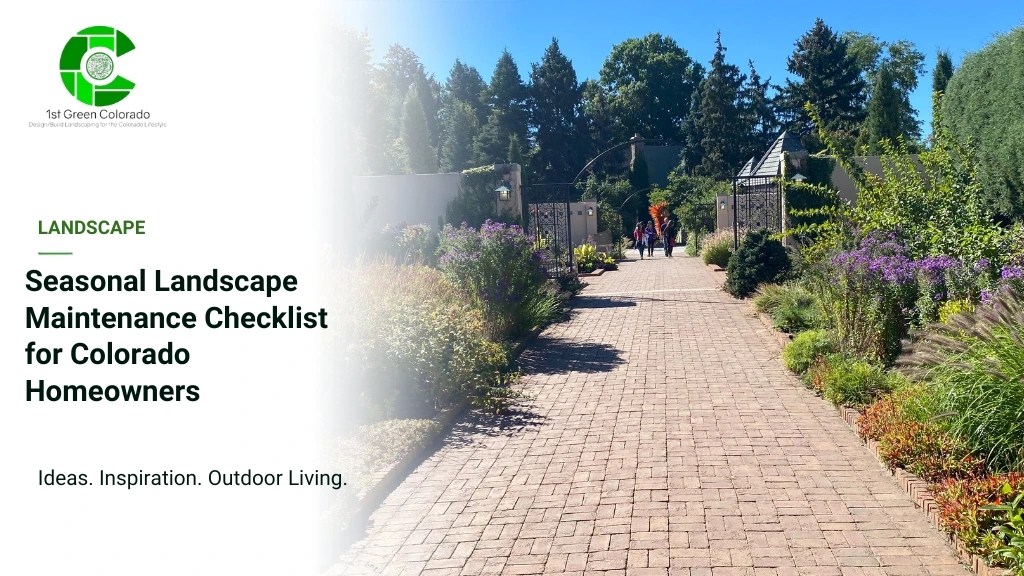
In Colorado, your landscape has to handle a lot. Dry summers, intense sun, sudden temperature changes, snow, and growing pressure on water resources can take a toll on even a well-designed yard. And when your backyard is an important part of how you spend summer evenings, letting it struggle through the season isn’t ideal.
The good news is that good maintenance doesn’t mean simply watering more. A smart plan for landscape maintenance for Colorado focuses on using water where it’s needed, choosing plants that can handle local conditions, and preparing your property for each season. Here’s a practical checklist to help you keep your landscape healthy, sustainable, and ready for outdoor living all year.
Key Takeaways
- Colorado’s dry climate makes water-efficient landscape care a priority throughout the year.
- Seasonal maintenance helps plants, turf, irrigation, lighting, and outdoor living features perform better.
- Native and water-wise plants can reduce irrigation needs when they are properly selected and maintained.
- Regular irrigation checks can prevent water waste caused by leaks, broken heads, or inefficient watering.
- Professional maintenance can help homeowners protect a high-value landscape without turning every weekend into yard work.
Why Colorado Landscaping Needs a Seasonal Maintenance Plan
A landscape doesn’t behave the same way in April as it does in August. Spring brings new growth, summer puts plants and irrigation systems under water stress, fall prepares the property for freezing temperatures, and winter leaves plants and outdoor features exposed to snow and cold.
Water deserves particular attention. Colorado has a semi-arid climate, and water availability varies significantly by community. That makes responsible landscape care important for both homeowners and the communities they live in.
A good maintenance plan isn’t simply about keeping everything green. It is about understanding what your landscape actually needs and using water, soil, plants, and irrigation efficiently.
| Season | Main Maintenance Priority |
| Spring | Inspect, repair, prune, and prepare |
| Summer | Conserve water and protect plants |
| Fall | Prepare plants and irrigation for winter |
| Winter | Protect the landscape and plan ahead |
The advantage of seasonal maintenance is simple. Instead of reacting to a dead plant, broken irrigation line, or damaged tree months later, you can catch smaller issues while they’re still manageable.
Spring Landscape Maintenance: Get Your Property Ready for the Growing Season
Spring is the time to find out what winter left behind. Before adding new plants or refreshing your outdoor spaces, walk the entire property and look for damaged branches, compacted soil, irrigation problems, and areas where water isn’t draining properly.
Your Spring Checklist
- Inspect irrigation lines and sprinkler heads
- Check for broken or leaking components
- Remove winter debris from planting beds
- Prune damaged branches
- Refresh mulch where needed
- Check soil condition
- Inspect outdoor lighting
- Look for early signs of plant disease or pests
- Prepare seasonal planting areas
Irrigation deserves special attention. A system that runs with a broken sprinkler head can waste water, while poorly positioned heads may water areas that don’t need it instead of delivering moisture where plants need it.
Spring is also a useful time to review your landscape as a whole. To do so, ask yourself these questions:
Are you maintaining areas of turf that receive little use? Are some planting beds constantly dry despite regular watering? Could native or water-wise plants perform better in certain areas?
These questions can help you make changes that reduce water demand before summer arrives.
Give Your Soil Some Attention
Healthy soil helps plants establish stronger root systems and use available water more effectively. Check for compacted areas, particularly in places that receive regular foot traffic.
Adding appropriate organic material or compost where needed can improve soil structure. Mulch can also help retain moisture, moderate soil temperature, and reduce weed growth.
A small amount of preparation in spring can make the rest of the growing season much easier to manage.
Summer Maintenance Is Really About Water Management?
Summer is when a Colorado landscape faces its greatest water demand. High temperatures, intense sunlight, wind, and low humidity can quickly dry out soil, while excessive irrigation can waste water without necessarily improving plant health.
A good routine for landscape maintenance in Colorado should therefore focus on watering efficiently rather than simply watering more.
Water Where the Plants Need It
Check irrigation zones regularly and adjust watering based on actual conditions. Drip irrigation can be particularly useful for planting beds because it delivers water closer to plant roots, while smart controllers can help prevent unnecessary watering.
Grouping plants according to their water requirements can also make irrigation more efficient. High-water plants shouldn’t be placed on the same irrigation zone as plants that naturally thrive with less moisture.
Mulch is another simple but effective tool. It helps reduce evaporation from the soil surface and keeps roots cooler during hot weather.
Don’t Assume More Water Means Healthier Plants
Overwatering can create its own problems. Constantly wet soil can affect root health, encourage disease, and lead to weaker plants.
Instead, monitor the landscape for signs of stress and adjust watering according to plant type, soil, exposure, and weather.
Native plants can be particularly useful in a water-wise landscape because many are adapted to Colorado’s local conditions.
For example, Penstemon can add seasonal colour, Blue Grama can provide texture, Serviceberry can add structure, and Rocky Mountain Juniper can provide evergreen interest. The right choices depend on your property’s conditions, but these types of plants can help create a landscape that doesn’t rely entirely on thirsty turf.
Water-Saving Tip: Before increasing your irrigation schedule, check whether the problem is actually poor coverage, compacted soil, or a damaged sprinkler head. More water isn’t always the solution.
Your Summer Outdoor Space Should Feel Like Part of the Home
Outdoor living is a lifestyle in Colorado. A patio, fire feature, pergola, or outdoor kitchen isn’t simply something to look at. It is where homeowners spend summer evenings, entertain friends, eat dinner, or relax after work.
That makes maintenance of these spaces just as important as plant care.
Add These to Your Summer Checklist
| Area | What to Check |
| Patio | Clean surfaces and inspect joints |
| Fire features | Check components and remove debris |
| Outdoor kitchen | Clean surfaces and inspect fixtures |
| Pergola or shade structure | Look for weather-related damage |
| Landscape lighting | Clean fixtures and check failed bulbs |
| Planting beds | Remove weeds and monitor irrigation |
Landscape lighting maintenance is easy to overlook because the plants are the focus during daylight hours. Clean fixtures, trim vegetation blocking light, and check connections so pathways and gathering areas remain functional after sunset.
The same applies to outdoor living features. A quick inspection during summer can help identify loose hardware, damaged surfaces, or drainage problems before they become bigger issues.
Fall Landscape Maintenance: Prepare Before the First Freeze
Fall is less about keeping the landscape growing and more about preparing it for what comes next. Colorado’s first hard freeze can arrive quickly, so delaying winter preparation can leave plants and irrigation vulnerable.
Start by gradually reducing irrigation as temperatures fall while continuing to meet the needs of plants that still require water. Local watering restrictions and recommendations should always take priority.
Your Fall Checklist
- Remove fallen leaves where they may smother plants
- Prune selectively where appropriate
- Plant suitable trees and perennials
- Refresh mulch before winter
- Inspect trees for damaged branches
- Prepare irrigation for winterisation
- Clean outdoor lighting fixtures
- Check outdoor living features for winter damage
- Remove dead or diseased plant material where appropriate
Fall is also a good time to take a step back and look at how your landscape performed through the busiest part of the year. Instead of simply preparing for winter, use this time to identify what worked well, where you could save water, and how the space could better support your outdoor lifestyle next season.
A few things are worth considering: Which areas needed too much water? Which plants struggled? Which parts of the yard were rarely used? Did your patio provide enough shade? Was your outdoor lighting adequate?
Those observations can help shape smarter, more sustainable improvements for the following year.
Don’t Overlook Trees and Shrubs
Snow and ice can place additional weight on branches, particularly on trees and shrubs that haven’t been properly maintained.
Check for dead, damaged, or weak branches before winter arrives. Larger trees may require professional assessment, especially when branches are close to structures or outdoor living areas.
Winter Maintenance: Protect What You’ve Built
Winter doesn’t mean landscape maintenance stops. It simply changes.
Snow and freezing temperatures can put pressure on trees, shrubs, irrigation components, lighting, and outdoor structures. Heavy snow should be handled carefully, particularly around vulnerable branches and ornamental plants.
Avoid repeatedly walking across frozen lawn areas when possible, since traffic can damage dormant turf. Keep an eye on trees and shrubs after major snow events and address broken or damaged branches when conditions are safe.
Winter is also an excellent time to plan.
If you’re considering a new outdoor living area, replacing high-water-use turf, improving irrigation, or redesigning planting beds, planning during the quieter months gives you more time to make thoughtful decisions.
How Professional Landscape Maintenance Can Save Water
Water savings don’t always require removing plants or giving up a beautiful lawn. Often, the biggest improvements come from better management.
Professional landscape maintenance services can identify issues that homeowners may miss, such as inefficient irrigation zones, stressed plants, compacted soil, or planting areas that require more water than they should.
| Maintenance Issue | Potential Solution |
| Overwatering | Adjust irrigation schedules |
| Broken sprinkler heads | Repair or replace components |
| High-water planting beds | Replant with appropriate water-wise species |
| Dry soil | Improve soil and mulch appropriately |
| Uneven irrigation | Reconfigure zones or irrigation coverage |
| Excessive turf | Reduce turf or choose a suitable alternative |
The important thing is to look at the landscape as a system. Changing one plant won’t necessarily solve a water problem if the irrigation system is inefficient. Similarly, replacing turf without improving soil or drainage may create a different set of maintenance issues.
Professional maintenance can help identify where small changes will have the greatest effect.
Residential, Commercial, and HOA Maintenance Require Different Approaches
Not every landscape has the same maintenance needs.
Residential landscape maintenance may focus on plant health, lawn care, outdoor living areas, irrigation, and keeping the property looking polished for everyday use.
Commercial landscape maintenance often has a stronger focus on appearance, safety, consistent presentation, and managing larger properties with multiple planting and irrigation zones.
HOA landscape maintenance requires consistency across shared spaces, seasonal upkeep, irrigation management, and adherence to community standards.
The maintenance schedule should reflect the property rather than follow a generic checklist.
For a luxury residential property, for example, landscape maintenance may include detailed care for mature trees, ornamental planting beds, outdoor kitchens, fire features, lighting, and water-efficient gardens. A commercial property may instead prioritise consistent appearance, accessibility, and efficient maintenance across a larger area.
Should You Hire a Landscape Maintenance Company?
If your landscape is small and relatively simple, seasonal maintenance may be manageable on your own. Larger properties are different.
A professional team can handle recurring tasks while also identifying issues before they become expensive problems. This can be particularly valuable for homeowners with mature trees, extensive planting beds, irrigation systems, outdoor living spaces, and landscape lighting.
When comparing landscape maintenance companies, ask what is included in their service and whether they offer seasonal or year-round plans.
A landscape maintenance contract should clearly outline the frequency of visits, services included, irrigation responsibilities, seasonal cleanups, and any work billed separately.
Before signing, ask whether the company handles irrigation adjustments, lighting maintenance, pruning, fertilisation, plant replacement, and emergency issues or whether these are charged separately.
Clarity at the beginning makes it much easier to manage the relationship throughout the year.
A Simple Landscape Maintenance Checklist to Save for Later
Use this quick checklist throughout the year:
| Task | Spring | Summer | Fall | Winter |
| Irrigation inspection | ✓ | ✓ | ✓ | |
| Plant health check | ✓ | ✓ | ✓ | ✓ |
| Mulch check | ✓ | ✓ | ✓ | |
| Landscape lighting | ✓ | ✓ | ✓ | ✓ |
| Pruning | ✓ | ✓ | ✓ | |
| Outdoor living inspection | ✓ | ✓ | ✓ | ✓ |
| Winterisation | ✓ | |||
| Landscape planning | ✓ | ✓ |
Keep this checklist handy, but remember that every property is different. A mature landscape with large trees and extensive irrigation will require more attention than a small, water-wise yard.
Final Thoughts
Good landscape maintenance Colorado homeowners can rely on is about keeping the property healthy while using resources wisely. Seasonal care protects plants, reduces water waste, and keeps outdoor living spaces ready to enjoy.
For homeowners who would rather spend their time using the landscape than maintaining it, professional landscape maintenance can provide consistent care while protecting the investment you’ve already made.
Frequently Asked Question
How often should a Colorado landscape be maintained?
Maintenance frequency depends on the size, plant selection, turf areas, irrigation system, and property type. Most landscapes benefit from regular seasonal attention rather than waiting until problems appear.
How can I reduce water use in my landscape?
Start by fixing irrigation problems, watering according to plant needs, using mulch, grouping plants with similar water requirements, and replacing unsuitable high-water areas with appropriate water-wise plants.
Is professional landscape maintenance worth it?
For larger or more complex properties, professional maintenance can save time and help identify irrigation, plant health, and seasonal issues before they become costly.
What does landscape maintenance usually include?
Services can include lawn care, pruning, planting bed care, irrigation checks, seasonal cleanups, mulch management, plant health monitoring, and landscape lighting maintenance.
What is the difference between residential and commercial landscape maintenance?
Residential maintenance is generally tailored to individual homes and their outdoor living spaces, while commercial maintenance focuses on larger properties, consistent presentation, safety, and more complex maintenance schedules.