
Key Takeaways
- Colorado’s semi-arid climate and clay soil demand a design approach, not just “add gravel.”
- Hydrozoning groups plants by water need, so nothing gets over- or under-watered.
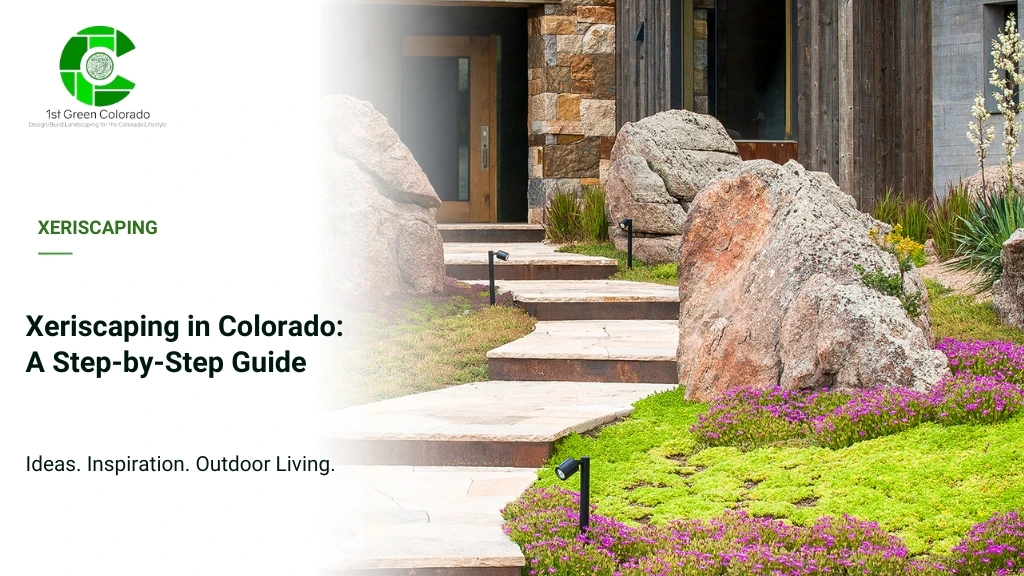
- A well-planned xeriscape front yard can look lush, think grasses, penstemon, and stone, not a rock pile.
- Native and Plant Select varieties establish faster and thrive at Front Range elevations.
- Professional hardscape design protects your investment through freeze-thaw cycles and hail.
Why Is Your Traditional Lawn Draining Colorado’s Water?
Water restrictions aren’t a passing phase along the Front Range. They’re the new normal. Every summer, another municipality tightens outdoor watering schedules, and the yards that have already switched to xeriscaping barely notice. The rest scramble. If you’ve ever stared at a cracked, sun-bleached lawn in July and wondered if there’s a smarter way to landscape in Colorado, there is, and it doesn’t mean surrendering your yard to cactus and pea gravel.
What Is the Difference Between Xeriscape and Zeroscape?
Here’s the misconception that keeps people from switching: a well-designed xeriscape yard design isn’t a stripped-down rock yard. It’s a curated landscape with layered grasses, silver-leafed shrubs, seasonal colour from penstemon and blanketflower, and natural stone paths that frame the space. A true zeroscape backyard, by contrast, swaps everything for hardscape and gravel with almost no plant life. A valid option for a side strip or drainage-heavy corner, but rarely the right call for an entire property.
Step 1:How Should You Assess Your Yard Before Digging?
Colorado clay compacts hard and drains slowly, and every property along the Front Range has its own microclimate (sun exposure, slope, wind, and elevation), all of which shift plant performance. Before removing a single blade of grass, map your sun patterns, check drainage, and note any HOA design guidelines.
Step 2: Why Is Hydrozoning Crucial for Your Plants?
Hydrozoning is the backbone of smart xeriscape landscape design. Plants with similar water needs go together, so nobody gets shortchanged. The Colorado State University Extension recommends this grouping specifically because newly planted xeric species still need consistent watering through their first season (drought-tolerant doesn’t mean drought-proof on day one).
Step 3: Which Plants Actually Thrive in the Front Range?
For a low-maintenance xeriscape front yard, lean on Front Range-tested varieties: fernbush and Apache plume for structure, Blonde Ambition blue grama for movement, and Rocky Mountain penstemon for colour that holds up to hail and wind. These aren’t generic drought plants pulled from a national list. They’re chosen for clay soil and elevation swings between Boulder and Broomfield.
Quick-reference: matching plants to water zone
| Hydrozone | Plant | Sun | Mature size | Season of interest |
| Low water | Apache plume | Full sun | 4–6 ft | Spring–summer blooms; feathery seed heads through fall |
| Low water | Kannah Creek buckwheat | Full sun | 12–18 in | Summer blooms; rust-gold fall colour |
| Low–medium | Fernbush | Full sun–part shade | 4–6 ft | Summer white blooms; aromatic foliage |
| Low–medium | Blonde Ambition blue grama | Full sun | 18–24 in | Summer–winter texture; distinctive seed heads |
| Medium | Rocky Mountain penstemon | Full sun | 12–18 in | Late spring–early summer blooms |
| Medium | Panchito manzanita | Full sun–part shade | 2–3 ft | Evergreen structure; winter interest |
Confirm hardiness and drainage for your specific elevation and lot before planting.
Step 4: How Can Hardscaping and Stone Do the Heavy Lifting?
This is where a simple xeriscape front yard becomes a genuinely luxurious one. Dry-stack stone walls, flagstone paths, and defined patio zones do more for curb appeal than plants alone ever could, and they need zero water. It’s also where amateur installs go wrong fastest: poor grading and mismatched materials crack and shift within a season or two. That’s the gap between a weekend project and landscape design built to last through Colorado’s freeze-thaw cycles.
Step 5: How Do You Scale This Design to a Smaller Space?
Even small backyard xeriscape ideas benefit from the same logic as a full front-yard overhaul, just tighter zones and fewer focal points. A single sculptural shrub, a gravel seating area, and two or three repeated grasses can outperform a yard packed with mismatched plants.
Is xeriscaping just gravel and rocks?
No, that describes a zeroscape, not a true xeriscape. A well-designed yard blends drought-tolerant plants, mulch, and stone hardscape to provide year-round texture and colour.
How much water does xeriscaping actually save?
Savings vary by design, but removing turf and grouping plants by water need consistently cuts outdoor use. Ask your municipal water provider about current local figures and rebates.
Do drought-tolerant plants need watering after planting?
Yes. According to Colorado State University Extension, xeric plants need regular water through establishment before they can handle drier conditions.
Can an HOA prohibit xeriscaping in Colorado?
Generally, no. Colorado law limits an HOA’s ability to ban xeriscape or drought-tolerant landscaping outright, though reasonable design guidelines may still apply. Confirm current rules with your HOA before construction.
Where do I start if I want this done right the first time?
Grading, drainage, and material selection are where DIY xeriscaping most often goes wrong. 1st Green Colorado designs and builds water-wise landscapes across Lafayette, Boulder, Erie, Superior, Louisville, and Broomfield. Reach out for a consultation before you break ground.
.