
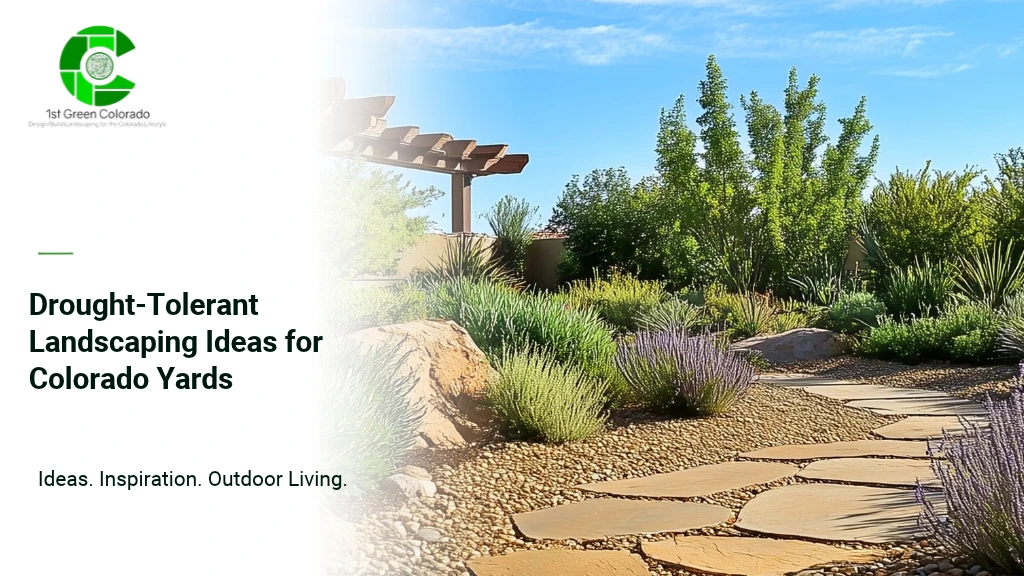
Colorado’s sunny skies are great for spending time outdoors, but they can be tough on a traditional landscape. Dry air, intense sunshine, and limited rainfall can leave water-hungry lawns and flower beds struggling through summer.
The solution isn’t to give up on a colorful yard. It’s to choose drought-tolerant landscaping that works with Colorado’s climate instead of against it.
From native flowering plants to natural stone features, you have plenty of options for creating an outdoor space that looks inviting without relying on thirsty lawns and planting beds.
Here are some drought-tolerant landscaping ideas to help you create a beautiful, water-wise Colorado yard.
Key Takeaways
- Drought-tolerant landscaping can reduce the amount of supplemental water your yard needs.
- Native and climate-adapted plants are practical choices for Colorado’s dry conditions.
- Xeriscape designs can combine colorful flowers, ornamental grasses, stone, and usable outdoor spaces.
- Grouping plants by their water needs helps you make better use of available moisture.
- Newly planted drought-tolerant plants still need water while their roots establish.
Why Choose Drought-Tolerant Landscaping in Colorado?
Colorado’s climate presents a particular challenge for landscape design. Along the Front Range, low annual precipitation, strong sunshine, and dry conditions can put pressure on plants that need frequent watering.
A traditional lawn surrounded by water-intensive flower beds may look appealing in spring, but keeping it green through a dry summer can require substantial supplemental irrigation.
Drought-tolerant landscaping offers another approach. Instead of choosing plants solely for their appearance, you select species that can handle Colorado’s growing conditions and combine them with materials that make the most of your outdoor space.
For example, imagine replacing a section of thirsty lawn with blue grama grass, flowering penstemon, and decorative stone. You still get color, texture, and visual interest, but the landscape is designed around plants better suited to the region.
According to Denver Water’s ColoradoScape guidance, water-wise landscapes can use native and adapted plants to create attractive outdoor spaces while reducing water demand.
7 Drought-Tolerant Landscaping Ideas for Colorado Yards
You don’t need to cover your entire yard in gravel or remove every patch of grass to create a water-wise landscape. The most successful designs balance plants, natural materials, and the way you want to use your outdoor space.
Here are seven ideas worth considering.
1. Create a Colorful Native Plant Garden
Native plants are a natural starting point for drought-tolerant landscaping in Colorado. Many are adapted to local conditions and can handle dry periods once established.
Consider these options:
- Rocky Mountain penstemon: Produces striking blue-purple flowers that add color to sunny planting beds.
- Blanket flower: Offers warm red, orange, and yellow blooms for a vibrant summer display.
- Blue grama grass: Adds fine texture and a distinctly Colorado feel to a water-wise landscape.
- Yarrow: Produces clusters of flowers and works well in sunny, dry areas.
- Rabbitbrush: Adds late-season yellow blooms and shrub-like structure.
You can combine these plants in a natural-looking garden that changes throughout the growing season.
For example, plant penstemon and blanket flowers among blue grama grass, then use a few larger stones to create visual structure. The result feels colorful and intentional without depending on a traditional flower bed filled with water-intensive plants.
2. Replace Part of Your Lawn With Xeriscape Plants
A large lawn isn’t the only way to create an inviting yard. If you rarely use certain grassy areas, consider replacing part of that space with xeriscape plants and other water-wise features.
Xeriscaping focuses on designing a landscape around water efficiency. It can include flowering perennials, native grasses, shrubs, ground covers, and hardscape elements.
Some options to consider include:
- Buffalo grass: A warm-season grass that can be a lower-water alternative to traditional turf in suitable locations.
- Creeping juniper: An evergreen ground cover that can spread across sunny areas.
- Ice plant: A low-growing succulent option for suitable sunny, well-drained spots.
- Mat penstemon: A compact flowering plant that can work well in rock gardens and dry planting areas.
Picture a front yard with a smaller patch of usable turf, a border of flowering perennials, and a broad planting bed covered with natural mulch. You retain an open, welcoming space while reducing the area that needs regular irrigation.
Choose plants according to your property’s sun exposure, soil, drainage, and elevation. Not every xeriscape plant will thrive in every part of Colorado.
3. Add Ornamental Grasses for Movement and Texture
Flowers bring color to a landscape, but ornamental grasses add something different: movement.
Their fine blades and seed heads catch the breeze, soften the appearance of stone features, and create visual depth without relying on a large number of flowering plants.
Consider drought-tolerant options such as:
- Blue grama: A Colorado native grass with distinctive curved seed heads.
- Little bluestem: Adds upright structure and attractive seasonal color.
- Prairie dropseed: Offers a fine-textured appearance for suitable planting sites.
Use grasses along the edges of a patio, between groups of flowering perennials, or as part of a naturalistic planting bed.
For example, a grouping of blue grama and little bluestem can frame a seating area while allowing nearby flowers to stand out. The combination gives the landscape a softer, more natural look than stone alone.
Check the mature height and spread before planting so the grasses fit the space rather than crowding walkways or seating areas.
4. Use Decorative Stone to Create Structure
Plants aren’t the only way to add visual interest to a drought-tolerant yard. Natural stone, decorative gravel, and boulders can define planting beds and create contrast between different areas.
Stone works particularly well alongside drought-tolerant plants because it introduces structure without requiring additional planted space.
You could use it to:
- Create a border around a native plant garden.
- Add boulders among flowering perennials and grasses.
- Define a dry creek bed in a landscape design.
- Separate a seating area from a planted section of the yard.
For example, a dry creek bed made with carefully placed river rock can create a natural-looking focal point between groups of native plants. It can also be designed to guide runoff, provided the grading and drainage are appropriate for your property.
Avoid treating an entire yard as a layer of rock with a few plants scattered throughout. A balanced design combines stone with vegetation, varied textures, and spaces that serve a purpose.
5. Choose Drought-Tolerant Plants for Sunny Slopes
Sloped areas can be challenging to landscape. Water may run downhill before it has a chance to soak into the ground, while exposed slopes can receive intense afternoon sun.
The right drought-tolerant plants can help these areas feel like a deliberate part of your yard rather than an awkward patch of ground.
Options for suitable sunny slopes include:
- Pussytoes: A low-growing native ground cover.
- Sulphurflower buckwheat: Offers yellow flowers and works in suitable dry, sunny sites.
- Creeping juniper: Provides evergreen coverage.
- Mat penstemon: Adds flowers without growing into a large shrub.
Combine plants with different heights and textures to create depth. Low-growing ground covers can fill the foreground, while flowering perennials add color farther up the slope.
Plant selection still matters. A steep, exposed slope with shallow soil may need different species from a gently sloping area with better moisture retention. If erosion or runoff is a concern, the landscape design should account for those conditions too.
6. Create a Pollinator-Friendly Drought-Tolerant Garden
A water-wise yard can do more than look attractive. With the right plant selection, it can also provide food and habitat for pollinators.
Bees and butterflies are drawn to flowering plants that offer nectar and pollen. A mix of native and climate-adapted species can provide seasonal color while supporting local wildlife.
Consider combining:
- Blanket flower for bright summer blooms.
- Rocky Mountain penstemon for blue-purple flowers.
- Yarrow for clusters of small blooms.
- Native grasses for texture and habitat.
Choose several species with different flowering periods instead of relying on a single plant that blooms for only a few weeks.
A practical example is a sunny garden border with penstemon toward the back, blanket flowers in the middle, and lower-growing plants near the edge. Add a few decorative stones to create structure, and the result can feel like a colorful garden rather than a conventional lawn replacement.
7. Combine Drought-Tolerant Landscaping With an Outdoor Living Area
Your yard doesn’t need to be all plants to feel green and inviting. Combining drought-tolerant landscaping with a functional outdoor living area can help you reduce irrigated space while making the yard more useful.
For instance, you could pair a natural stone patio with a border of blue grama, penstemon, and drought-tolerant shrubs. A pergola or seating area can create a focal point, while plants soften the transition between the hardscape and the rest of the yard.
This approach works especially well if you want space for outdoor dining, relaxing, or entertaining without dedicating most of your property to lawn.
The key is to make each part of the yard serve a purpose. The patio provides space to gather, while the surrounding plants add color and texture with lower water needs once established.
If you’re planning a larger transformation, our residential landscape design and installation services can help bring planting choices, hardscape features, and outdoor functionality together in one design.
How to Choose the Right Drought-Resistant Plants for Your Yard
The best drought-resistant plants aren’t simply the ones that survive with the least water. They also need to suit your property’s specific growing conditions.
Before selecting plants, consider these three factors.
Sunlight and Exposure
A plant that thrives in full sun may struggle in a shaded corner, while some species tolerate dry shade better than others.
Notice which parts of your yard receive morning sun, intense afternoon sun, or very little direct light. Choose plants accordingly.
Soil and Drainage
Colorado properties can have very different soil conditions. Some areas have dense clay soil, while others have sandy or rocky ground that drains quickly.
Plants suited to dry, well-drained soil may struggle in a spot where water collects after rain. Match the plant to the site instead of assuming all drought-tolerant species have identical needs.
Water Needs During Establishment
Drought-tolerant doesn’t mean no water.
Newly planted perennials, grasses, shrubs, and trees need appropriate watering while their roots establish. Their longer-term water needs depend on the species, soil, weather, and planting location.
Group plants with similar water needs together. This makes it easier to provide the right amount of water to each part of the landscape without treating the entire yard as one uniform space.
For more guidance, see Colorado State University Extension’s xeriscaping principles, which explain how plant selection and grouping contribute to water-wise landscape design.
Conclusion
Drought-tolerant landscaping doesn’t mean settling for a yard filled with gravel or giving up on colorful gardens. With the right combination of native plants, ornamental grasses, ground covers, stone, and outdoor living features, you can create a landscape that feels inviting and works with Colorado’s dry climate.
Start by identifying the areas where traditional lawn or water-intensive planting may not be the best fit. Then choose drought-tolerant plants that suit your soil, sunlight, and elevation.
The result can be a yard with more texture, seasonal color, and usable outdoor space, without relying as heavily on supplemental irrigation.
Frequently Asked Question
What is drought-tolerant landscaping?
Drought-tolerant landscaping uses plants and design elements suited to dry conditions and reduced supplemental watering. In Colorado, this can include native grasses, flowering perennials, shrubs, ground covers, and stone features selected to suit the local climate and your property’s growing conditions.
What are the best drought-tolerant plants for Colorado?
Popular options include blue grama grass, Rocky Mountain penstemon, blanket flower, yarrow, little bluestem, and creeping juniper. The best choices depend on your elevation, soil, sunlight, and drainage, so check that each species is suitable for your specific planting location.
What is the difference between drought-tolerant plants and drought-resistant plants?
The terms are often used interchangeably. Both generally describe plants that can tolerate periods of limited water once established. However, neither term means a plant can survive indefinitely without water, and young plants usually need supplemental watering while their roots develop.
Does xeriscaping mean replacing your entire lawn with rocks?
No. Xeriscaping is a water-wise landscaping approach, not simply a style of covering a yard with gravel. It can include colorful flowers, native grasses, shrubs, ground covers, and usable lawn areas, combined in a design that reduces unnecessary water use.