
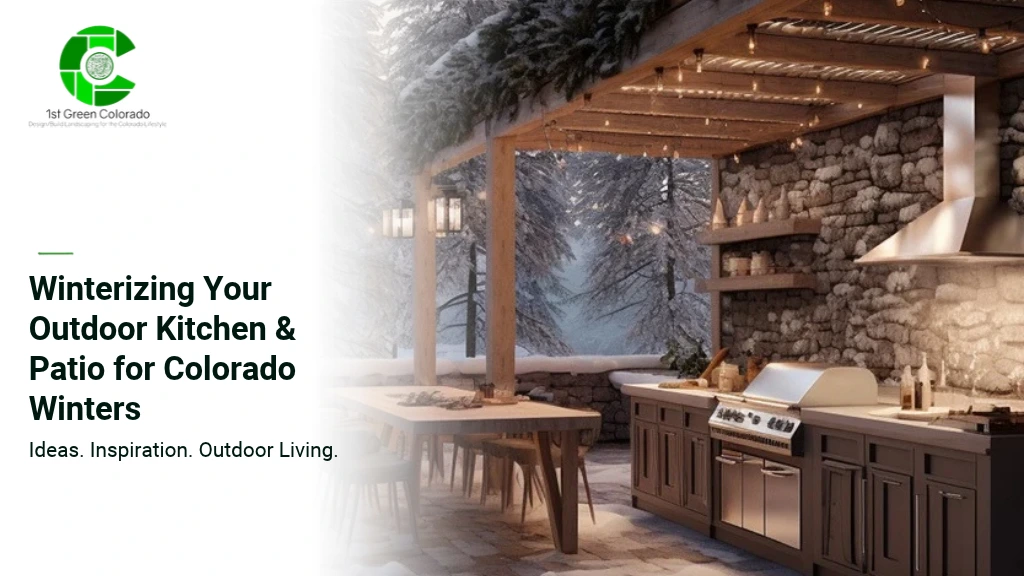
Colorado’s fall evenings can make an outdoor kitchen and patio feel like the perfect place to gather. But as temperatures drop, the same outdoor space faces freezing nights, snow, wind, and repeated freeze-thaw cycles.
Before winter starts, you must keep the space ready for months of colder weather. Water left inside plumbing can freeze, outdoor appliances may need specific winterization steps, and patio furniture can suffer from prolonged exposure to snow and moisture.
Knowing how to winterize your outdoor kitchen helps you protect these features before the first hard freeze arrives.
Here’s how to prepare your outdoor kitchen, patio furniture, faucets, and other outdoor features for a Colorado winter.
Key Takeaways
- Winterize your outdoor kitchen before freezing temperatures arrive.
- Shut off and drain outdoor water lines according to the plumbing system’s requirements.
- Disconnect garden hoses and winterize outdoor faucets to reduce the risk of freeze damage.
- Choose outdoor kitchen covers that fit your appliances and can withstand local weather conditions.
- Clean and store patio furniture cushions, then cover or store furniture according to the manufacturer’s instructions.
- Follow the specific winterization instructions for grills, refrigerators, sinks, and other outdoor appliances.
Why Winterize Your Outdoor Kitchen Before Winter
An outdoor kitchen is built for outdoor use, but that doesn’t mean every component can safely withstand freezing temperatures without preparation.
Colorado’s winter weather can bring sudden temperature drops, snow accumulation, strong winds, and repeated freezing and thawing. These conditions can affect plumbing, appliance connections, furniture finishes, cushions, and other exposed features.
Water is one of the biggest concerns. If water remains in a supply line, faucet, sink trap, or other plumbing component, it can freeze and expand. That expansion can crack pipes or fittings, leaving you with repairs to handle when spring arrives.
Imagine turning on your outdoor sink for the first time in April, only to discover a leak behind the cabinet because water froze inside a line during winter. Proper winterization helps reduce the risk of that surprise.
The same principle applies to the patio itself. Cushions left outside can absorb moisture, while furniture exposed to snow and fluctuating temperatures may deteriorate faster than expected.
Preparing the space before the first hard freeze helps protect your investment and makes it easier to bring your outdoor kitchen back into use when warmer weather returns.
How to Winterize Your Outdoor Kitchen Before the First Freeze
The exact process depends on your kitchen’s layout, appliances, plumbing, and utility connections. A simple grill station requires different preparation from a built-in kitchen with a sink, refrigerator, and connected water supply.
Start with the components that are most vulnerable to freezing temperatures.
1. Shut Off and Drain the Outdoor Kitchen Water Supply
If your outdoor kitchen has a sink or connected water line, identify the shutoff valve and follow the system’s winterization instructions.
Depending on how the plumbing is installed, the process may involve shutting off the supply, draining exposed lines, and addressing water trapped in the faucet, sink trap, or other components.
Don’t assume that closing the valve alone removes all the water. A line can retain water even after the supply is shut off.
If your outdoor kitchen has permanent plumbing, consult a qualified plumber about the appropriate winterization method. The correct steps depend on whether the system drains by gravity, has dedicated drain points, or requires another procedure.
2. Winterize Your Outdoor Faucet
An exposed outdoor faucet can be vulnerable to freezing, especially if water remains in the connected hose or pipe.
To winterize an outdoor faucet:
- Disconnect the garden hose and any hose attachments.
- Shut off the water supply to the faucet if it has a dedicated indoor valve.
- Drain the faucet and connected line according to the plumbing design.
- Follow the manufacturer’s instructions if you have a frost-free faucet.
A frost-free faucet isn’t automatically protected in every situation. If a hose remains attached, water can be trapped inside the faucet and interfere with its ability to drain properly.
For an outdoor kitchen with a sink, the faucet and plumbing may need a separate winterization procedure from the garden hose connection.
If you’re unsure how your faucet is installed, have a plumber check it before freezing temperatures arrive. This is especially important for outdoor kitchens with concealed water lines or plumbing that passes through exposed cabinets.
3. Prepare Your Outdoor Kitchen Appliances
Outdoor kitchens often include more than a grill. You might have a refrigerator, side burner, sink, ice maker, or other built-in equipment.
Each appliance has different winterization requirements, so check the manufacturer’s instructions before covering or shutting it down.
For grills: Clean away food residue and grease, allow the appliance to cool completely, and follow the manufacturer’s instructions for protecting the burners and other components. If the grill uses propane or natural gas, follow the applicable shutdown and storage guidance.
For outdoor refrigerators: Check whether the unit is designed to remain outdoors through freezing temperatures. Some models require the appliance to be emptied, switched off, cleaned, and left with the door positioned as instructed by the manufacturer.
For ice makers and water-connected appliances: Shut off the water supply and follow the specified draining procedure. These components can retain water even when the appliance is no longer in use.
For sinks and built-in plumbing: Make sure the water supply and drainage system are prepared for freezing conditions. Traps and low points can hold water that may need to be removed or protected.
If your outdoor kitchen has multiple connected appliances, make a list of their winterization requirements so you don’t overlook a component.
How to Choose Outdoor Kitchen Covers for Colorado Winters
Outdoor kitchen covers can help shield exposed appliances from snow, moisture, dust, and debris. However, the right cover depends on what you’re protecting and how the space is exposed to the weather.
A cover designed for a standalone grill may not fit a built-in grill or an outdoor kitchen with counters and side burners.
When choosing outdoor kitchen covers, look for these features:
- A suitable fit: The cover should match the appliance’s dimensions and shape without leaving large exposed areas.
- Weather-resistant material: Choose a material designed for outdoor exposure and the conditions in your area.
- Secure fastening: Straps or other fastening features help prevent the cover from blowing away during strong winds.
- Ventilation where required: Follow the appliance manufacturer’s recommendations. A cover should not trap moisture or be used while an appliance is hot.
- Compatibility with the appliance: Confirm that the cover is intended for your specific type of grill or outdoor equipment.
For example, a built-in grill beneath a covered patio may need a different cover from a freestanding grill exposed to wind and snow. The surrounding structure provides some shelter, but it doesn’t necessarily protect the appliance from moisture or temperature changes.
Avoid assuming that one oversized tarp is the best solution for every component. Use covers designed for the equipment, and make sure the appliances are completely cool before covering them.
How to Protect Patio Furniture in Winter
Your patio furniture may be designed for outdoor use, but prolonged exposure to snow, moisture, and freezing temperatures can still affect its appearance and condition.
Knowing how to protect patio furniture in winter starts with understanding the materials and whether the furniture is intended to remain outside year-round.
Store Cushions and Fabric Accessories Indoors
Cushions, pillows, umbrellas, and removable fabric accessories are usually the easiest items to bring indoors.
Before storing them, make sure they’re clean and completely dry. Keeping damp fabric in a sealed storage container can encourage mold or mildew.
Store these items in a dry location, such as a garage or indoor storage area, following the manufacturer’s care instructions.
Cover Furniture That Will Remain Outside
If you don’t have room to store your furniture indoors, choose covers suited to each piece.
A good furniture cover should fit securely, withstand outdoor conditions, and allow moisture to escape as recommended by the manufacturer. Avoid wrapping furniture in a way that traps condensation against the surface.
The material matters, too. Wood, metal, wicker, and plastic furniture can respond differently to prolonged exposure to moisture and temperature changes.
For example, a metal dining set beneath a pergola may have more protection from falling snow than a lounge set in an open patio. Both can still be exposed to wind-driven moisture and freezing temperatures, so their storage needs may differ.
Store Lightweight Items Before Snow and Strong Winds Arrive
Lightweight chairs, umbrellas, and removable accessories can shift or blow around during Colorado’s winter winds.
If an item can be safely stored, move it to a sheltered location before severe weather arrives. For heavier furniture that stays outside, follow the manufacturer’s recommendations for covering and securing it.
For more ideas on creating a functional outdoor space, read our guide to hardscape features that transform Colorado backyards into outdoor living spaces.
How to Prepare Your Patio for Snow and Freezing Temperatures
Your patio is the foundation of your outdoor living space, so it deserves attention before winter weather arrives.
The goal isn’t to make the patio completely immune to snow or ice. It’s to prepare exposed features and furniture for the conditions they’re likely to face.
Start by moving removable accessories and covering furniture that’s staying outdoors. If your patio has a built-in kitchen, confirm that appliance covers fit properly and that plumbing has been winterized separately.
If you have a pergola, covered seating area, or other overhead structure, follow the manufacturer’s guidance for seasonal weather preparation. Don’t assume a roof or shade structure will protect every item beneath it from wind-driven snow and freezing temperatures.
Colorado’s freeze-thaw cycles can also affect hardscape materials. Water that enters joints or collects in poorly drained areas can freeze and expand. If you’re planning a new patio or outdoor kitchen, material selection, grading, and drainage should be considered during the design stage.
When Should You Winterize Your Outdoor Kitchen in Colorado?
Don’t wait until snow is in the forecast to begin winterizing your outdoor kitchen.
The best time is before the first hard freeze that could affect your plumbing or appliances. Colorado’s weather can change quickly, and freezing temperatures may arrive even when daytime conditions still feel mild.
Use the following seasonal approach:
- Early fall: Check the winterization instructions for your grill, refrigerator, sink, and other appliances. Identify water shutoff valves and gather suitable covers.
- As temperatures begin to drop: Disconnect garden hoses, prepare outdoor faucets, and arrange for plumbing winterization if needed.
- Before the first hard freeze: Complete the required water-draining procedures, prepare appliances, and cover or store patio furniture and accessories.
The exact timing depends on your location and the forecast. Properties at higher elevations or in colder areas may need to prepare earlier than those at lower elevations.
If your outdoor kitchen has permanent water lines, built-in appliances, or a complex plumbing setup, arrange professional help before freezing weather becomes imminent.
Should You Hire a Professional to Winterize Your Outdoor Kitchen?
Some parts of winter preparation are straightforward. You can often bring cushions indoors, disconnect garden hoses, and cover a cool grill yourself.
Permanent plumbing and water-connected appliances are a different matter.
A professional can help identify where water may remain trapped, determine how the lines should be drained, and advise on components that require separate protection. This is particularly useful for outdoor kitchens with sinks, refrigerators, ice makers, or concealed plumbing.
If you’re planning a new outdoor kitchen or upgrading an existing patio, it’s also worth considering winter access, appliance placement, and the location of shutoff valves during the design process.
At 1st Green Colorado, our residential landscape design and installation services bring together outdoor living features, patios, and functional layouts designed for Colorado conditions.
Conclusion
Winterizing your outdoor kitchen and patio is about more than putting a cover over the grill. Before Colorado’s first hard freeze, you need to consider the water supply, outdoor faucets, connected appliances, patio furniture, and exposed features.
Start by checking the manufacturer’s instructions for your equipment. Disconnect hoses, prepare plumbing using the appropriate method, and choose covers suited to your appliances and furniture. If your outdoor kitchen has permanent water lines or complex connections, consult a qualified professional.
A little preparation before winter arrives can help protect your outdoor living space and make it easier to enjoy again when warmer weather returns.
Frequently Asked Questions
How do you winterize an outdoor kitchen?
Shut off and drain the water supply using the appropriate procedure, prepare connected appliances according to their manuals, and cover or store exposed equipment. Disconnect garden hoses and address outdoor faucets before freezing temperatures arrive. Permanent plumbing may require professional winterization.
How do you winterize an outdoor faucet?
Disconnect the garden hose, shut off the water supply if the faucet has a dedicated valve, and drain the faucet and connected line according to the plumbing design. Follow the manufacturer’s instructions for frost-free faucets, and consult a plumber if you’re unsure how the line drains.
What outdoor kitchen covers are best for winter?
Choose covers designed for your specific grill or appliance. Look for a secure fit, weather-resistant materials, and appropriate ventilation where required. Make sure the appliance is completely cool before covering it, and follow the manufacturer’s recommendations for winter storage.
How do you protect patio furniture in winter?
Store removable cushions, pillows, and fabric accessories indoors after cleaning and drying them. Cover furniture that remains outside with suitable, securely fitted covers. Follow the care instructions for wood, metal, wicker, or other materials, and store lightweight pieces before strong winds arrive.