
| Colorado’s sun, wind, and freeze-thaw cycles mean a backyard needs more than pretty pavers. It needs hardscape features built for the Front Range. This guide covers seven standout picks, from natural-stone patios to xeric dry creek beds, that cut water use while turning your yard into a real living space. |
Key Takeaways
- Well-planned backyard hardscape ideas reduce irrigated lawn without sacrificing style
- Retaining walls solve Colorado’s sloped-lot problem while adding usable space
- Fire pits and outdoor kitchens make outdoor living a year-round lifestyle, not a summer bonus
- Pairing stone with native, low-water plants keeps a design both luxurious and sustainable
- 1st Green Colorado designs every hardscape feature for local soil, elevation, and water restrictions
- Pergolas and recirculating water features round out a design without adding meaningful water use
If you’ve watched half your water bill disappear into a lawn that still looks patchy by July, you already know the problem. Colorado’s intense sun, dry air, and sudden hailstorms punish traditional landscaping, and a big stretch of thirsty turf isn’t doing your yard (or your water bill) any favors. The fix isn’t to give up on outdoor space. It’s to rethink what that space is made of. Good hardscape ideas turn a struggling lawn into a durable, water-wise backyard you’ll actually use, whether that’s morning coffee on a stone patio or a fire pit gathering that runs late into a September night. Below are seven features worth considering, along with what makes each one work in the Colorado-specific climate zone.
| Feature | Colorado advantage | Water impact |
| Natural-stone patio | A properly installed, freeze–thaw-resistant base can perform better than a poorly prepared concrete surface in Colorado’s changing temperatures. | Replaces irrigated turf and can reduce the area requiring regular watering. |
| Fire pit or fire lounge | Designed with suitable materials and wind protection, it can withstand Front Range gusts and extend outdoor use into cooler evenings. | No direct water-saving benefit. |
| Retaining wall with seat wall | Helps manage the sloped lots common from Lafayette to Broomfield while creating additional seating and usable levels. | Reduces erosion and controls stormwater runoff. |
| Outdoor kitchen and dining zone | Makes outdoor entertaining more practical, allowing homeowners to use the backyard instead of moving between indoor and outdoor spaces. | No direct water-saving benefit. |
| Dry creek bed or xeric transition | Channels stormwater away from structures and creates a natural transition between built areas and plantings. | Reduces irrigated lawn area and can support water-wise planting. |
| Pergola with integrated lighting | Reduces glare and heat from Colorado’s intense high-altitude UV exposure while providing a comfortable evening entertaining area. | No direct water-saving benefit. |
| Recirculating water feature | Adds sound, movement and visual interest without relying on a continuously flowing water supply. | Minimal water use because the system operates in a closed loop; occasional topping-up may still be required. |
1. A Natural-Stone Patio Built to Survive Colorado Winters
A well-installed patio hardscape is the anchor of most backyard redesigns. But Colorado’s freeze-thaw cycles are unforgiving on poorly set stone. Cracked joints and heaving pavers are a common callback for contractors who cut corners on base prep. Flagstone with a properly compacted gravel base holds up far better here than concrete slabs. Soften the edges with low groundcovers like kinnikinnik or creeping juniper, both proven performers in Colorado’s clay-heavy soil.
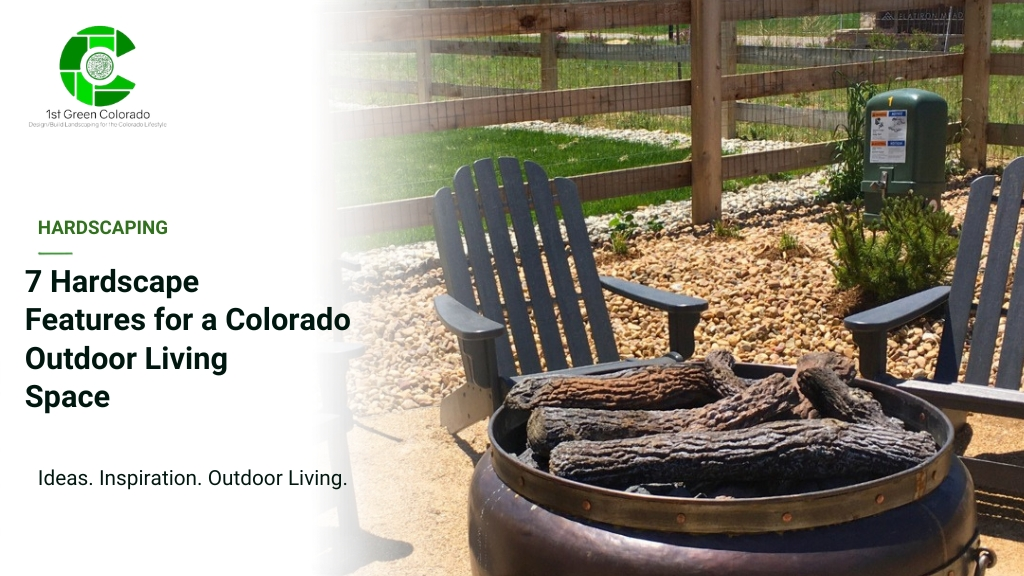
2. A Fire Pit or Fire Lounge That Extends Your Season
Evenings cool off fast at altitude, and a fire feature with built-in seating stretches outdoor living well past the last warm afternoon. Masonry fire pits last longer than prefab kits and hold up better against wind gusts common along the Front Range. Position it with clearances and wind direction in mind. A detail, a good hardscape designer near me search should turn up, but one worth confirming before installation day.
3. A Retaining Wall That Does More Than Hold Soil
Sloped lots are common from Lafayette through Broomfield, and a seat-wall-topped retaining wall converts wasted grade into a level terrace for dining or lounging. It also controls erosion during Colorado’s sudden downpours, something a flat yard doesn’t need to worry about.
4. An Outdoor Kitchen and Dining Zone
This is where hardscaping design meets everyday life. A compact outdoor kitchen (grill, counter, maybe a pizza oven) keeps entertaining outside, rather than shuttling trays through a sliding door. Plan for wind screening and shade (both matter more in Colorado than most outdoor-kitchen articles admit).
5. A Dry Creek Bed or Xeric Garden Transition
Instead of a driveway-adjacent gravel strip, a dry creek bed channels roof runoff while adding real texture and movement to the yard. Pair it with blue grama grass, penstemon, or threeleaf sumac for a planting palette suited to Colorado’s water restrictions. According to CSU Extension, landscaping can account for as much as half of a household’s water use, and reducing irrigated turf area is one of the most effective ways to bring that number down.
6. A Pergola Or Shade Structure With Integrated Lighting
Colorado’s UV index runs high even at moderate temperatures, and an uncovered patio can go from pleasant to unusable by 2 p.m. A cedar or powder-coated steel pergola over a dining or lounge area cuts glare, protects furniture from sun damage, and (with low-voltage landscape lighting worked into the beams) turns the same space into a warm evening gathering spot. It’s a smaller build than a full outdoor kitchen, but often has the biggest day-to-day impact on how often a family actually uses the yard.
7. A Recirculating Water Feature
A small-boulder waterfall or bubbling fountain sounds counterintuitive in a water-conscious state. But a closed-loop, recirculating system uses only a fraction of the water a lawn sprinkler does, and it adds sound and movement that stone and plants alone can’t. Positioned near a patio, it also masks road noise, which matters more than most homeowners expect on corner lots.
None of these features works in isolation. The best backyards blend two or three, tied together with planting that fits Colorado’s growing conditions. That’s the kind of full-picture planning 1st Green Colorado has built its reputation on, working from concept through construction rather than handing off a plan and walking away. If you’re weighing options, our residential hardscaping guide and landscape design ideas guide go deeper on materials and layout.
Even smaller updates matter. A well-planned small front yard hardscape idea can cut down on lawn mowing and water use just as much as a full backyard overhaul.
Frequently Asked Questions
What’s the most practical hardscape feature for a sloped Colorado backyard?
A retaining wall is usually the starting point as it controls erosion, creates level space, and opens up areas that were previously unusable.
Which hardscape features actually reduce water use?
Patios, dry creek beds, and gravel seating zones cut down irrigated lawn area, especially when paired with hydrozoned, low-water planting.
What plants work well around a Colorado patio?
Penstemon, blue grama grass, kinnikinnik, and threeleaf sumac all handle Colorado’s elevation, wind, and soil without heavy irrigation.
Is a fire pit suitable for every backyard?
Not automatically, as wind exposure, clearances, and local fire regulations all factor in, which is why a site-specific design matters.
Ready to redesign your backyard for Colorado’s climate?
Contact 1st Green Colorado for a consultation built around your soil, slope, and water goals.