
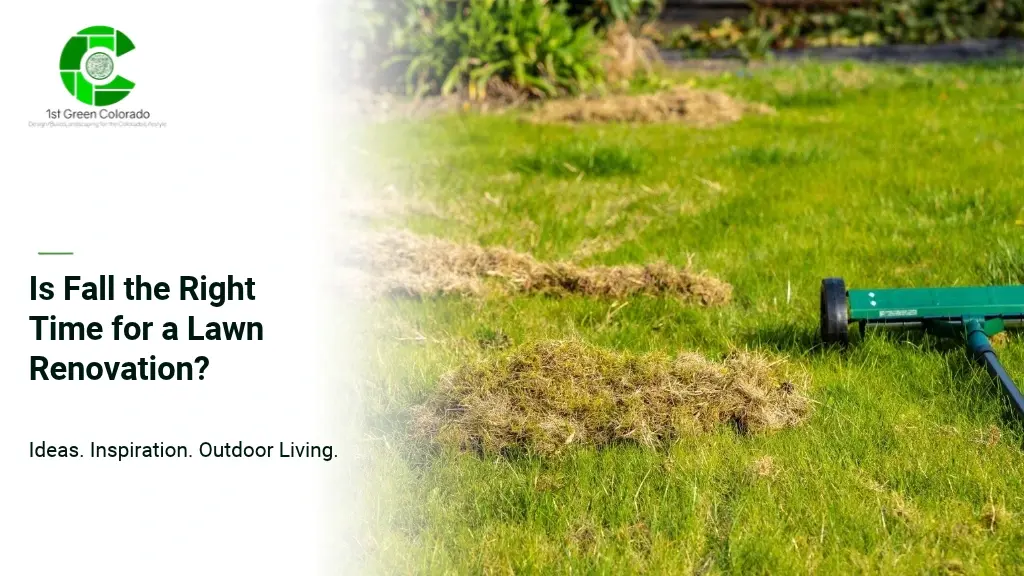
Summer can be tough on a Colorado lawn. After months of intense sunshine, dry weather, and outdoor activity, you might notice thinning grass, brown patches, or areas that look beyond repair.
Fall offers an opportunity to give your lawn a fresh start. Cooler temperatures and soil that retains summer warmth can create favorable conditions for new grass to establish. But there’s a catch: Colorado’s fall planting window can be short, especially at higher elevations.
So, is lawn renovation worth doing in fall, or should you wait until spring? The answer depends on how damaged your lawn is, which grass you’re growing, and how much time remains before the first hard freeze.
Here’s how to decide whether fall is the right season to restore your lawn.
Key Takeaways
- Early fall can be an excellent time for lawn renovation in many parts of Colorado.
- Mid-August to mid-September is generally the preferred seeding window along the Front Range and Western Slope for cool-season grasses.
- Thin patches may only need overseeding, while severely damaged lawns may require more extensive restoration.
- Lawn renovation cost depends on the size of the area, the extent of damage, and whether you need reseeding, sod, soil preparation, or grading.
- Seeding after the first fall frost is generally not recommended in Colorado because young grass may not establish before winter.
Why is Fall a Good Time for Lawn Renovation?
Fall can offer a useful combination of cooler air temperatures and soil that remains warm enough for grass seed to germinate. These conditions can help new grass establish without the intense heat that often makes summer planting challenging.
Here are three reasons fall lawn renovation can work well.
1. Cooler Temperatures Can Help New Grass Establish
Colorado summers can expose lawns to intense sunshine, dry air, and periods of high heat. These conditions can make it difficult for newly seeded grass to establish.
As temperatures cool in fall, new grass may face less heat stress while still benefiting from suitable soil temperatures.
For example, if your lawn has thin areas where the soil is visible, early fall can provide an opportunity to introduce new grass before winter arrives.
However, timing matters. Grass seed needs enough time to germinate and develop before freezing conditions slow its growth.
2. You Can Address Summer Damage Before Winter
Summer damage doesn’t always mean you need to replace your entire lawn. Sometimes, only a few sections have thinned out because of heat, drought, shade, or heavy foot traffic.
Fall can be a good time to assess these areas and decide whether they need overseeding or more extensive restoration.
If most of your lawn is healthy but a few sections look sparse, targeted renovation may be enough. If large areas have died or the existing grass is poorly suited to your property’s conditions, a more comprehensive approach may make sense.
3. You Can Give Your Lawn a Head Start for Spring
When fall renovation is completed early enough, new grass has an opportunity to establish before winter. That can put your lawn in a better position for spring than waiting until the following growing season to address the damage.
Still, fall renovation isn’t a guarantee of a lush lawn by spring. The result depends on the grass variety, planting date, weather, and how well the new grass establishes.
When is the Best Time for Lawn Renovation in Colorado?
The best time to renovate your lawn depends on your grass type, elevation, and local weather conditions.
For cool-season grasses such as Kentucky bluegrass, perennial ryegrass, and fescues, Colorado State University Extension identifies mid-August to mid-September as the optimal seeding period along the Front Range and Western Slope.
Higher-elevation areas may have an even shorter window. Warm-season grasses, such as buffalograss and blue grama, generally have an earlier planting season and should not be seeded late in fall.
Here’s a general guide:
| Timing | Is renovation a good idea? |
| Mid-August to mid-September | Often the preferred window for cool-season grass seeding along the Front Range and Western Slope. |
| Late September | Success becomes more dependent on elevation, grass type, and the weather. |
| October, before a frost | Conditions may be too late for reliable establishment, depending on your location and grass variety. |
| After the first fall frost | New seeding is generally not recommended because seedlings may not survive winter. |
| Spring | A useful alternative when the fall planting window has passed. |
These are general guidelines rather than guaranteed dates for every property. A lawn in a higher-elevation community may have different conditions from one along the lower Front Range.
For more detail, read Colorado State University Extension’s guide to renovating the home lawn.
Ready to Plan Your Colorado Landscape?
Tell us about your yard and how you want to use it. Our team will design a landscape that fits your space and Colorado’s climate.
Start Your Project Call (303) 926-7260How to Renovate a Lawn: Choosing the Right Approach
Not every damaged lawn needs a complete replacement. The right approach depends on how much healthy grass remains and what’s causing the problem.
1. Overseeding for Thin or Patchy Grass
If your lawn is mostly healthy but has thin sections, overseeding may be enough.
Overseeding introduces additional grass seed into an existing lawn to improve density and fill sparse areas. It’s often a suitable option when the existing grass is still worth keeping.
For example, if the lawn looks thin after a dry summer but still has plenty of healthy grass, overseeding may help fill gaps without requiring you to start from scratch.
The seed should be compatible with your existing grass. Choosing the right variety for Colorado’s climate and your property’s conditions is important for successful establishment.
2. Partial Lawn Restoration for Damaged Areas
Sometimes, the damage is concentrated in specific sections rather than spread throughout the yard.
In that case, lawn restoration may involve repairing bare areas, addressing uneven ground, and introducing new grass where needed.
This approach can be useful when certain sections have struggled because of heavy use, localized damage, or changing sunlight conditions.
The key is to identify why those areas have deteriorated. Simply adding seed may not solve the problem if the underlying issue is poor drainage, excessive shade, or unsuitable soil conditions.
3. Complete Lawn Renovation for Severely Damaged Grass
If large areas of your lawn have died or the existing grass is no longer suitable for your property, a more comprehensive renovation may be necessary.
Depending on the condition of the site, this could involve removing existing turf, preparing the soil, selecting a new grass variety, and establishing a new lawn.
For example, a yard with extensive dead grass and large bare patches may need more than overseeding to achieve a consistent result.
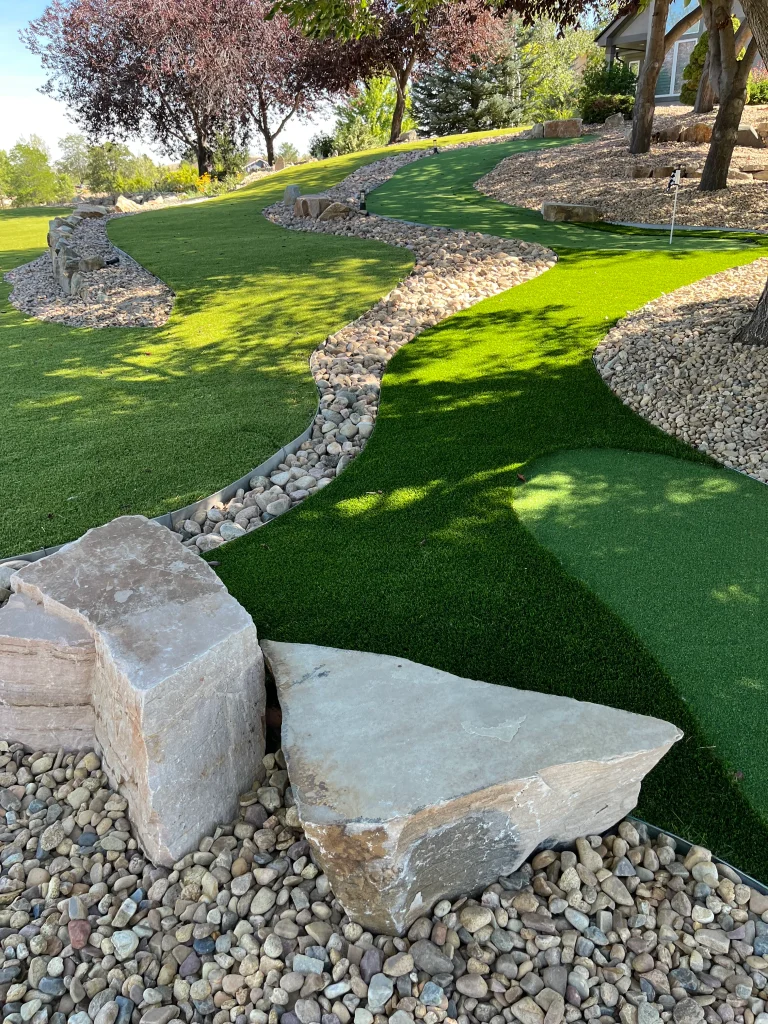
A complete renovation can also be an opportunity to reconsider whether traditional turf is the best fit for every part of your property. If some areas receive too much shade or require more water than you’d prefer, you might explore alternative landscape options as part of the redesign.
Our residential landscape design and installation services can help you consider how a new lawn fits into the wider layout of your outdoor space.
How Much Does Lawn Renovation Cost?
The lawn renovation cost depends on the scope of work. Repairing a few thin areas is a different project from removing an entire lawn and installing new turf.
Before setting a budget, consider these factors.
| Cost factor | How it affects the project |
| Lawn size | Larger areas generally require more seed, sod, materials, and labor. |
| Extent of damage | Minor thinning may need less work than widespread dead grass or bare soil. |
| Renovation method | Overseeding, partial restoration, and complete replacement involve different levels of work. |
| Soil preparation | Compaction, uneven ground, or other site issues may require additional preparation. |
| Grass selection | Different seed varieties and sod options have different material costs. |
| Installation method | DIY work and professional installation have different labor and equipment costs. |
For instance, a lawn that only needs additional seed will generally require a smaller investment than one that needs old turf removed, soil reworked, and new sod installed.
There isn’t one reliable price that applies to every Colorado property. The most useful estimate comes from assessing the lawn’s condition, measuring the area, and determining which renovation method is appropriate.
If your lawn is part of a larger landscape project, explore our complete guide to Colorado landscape design for more context on planning an outdoor space around your property, priorities, and budget.
Should You Renovate Your Lawn in Fall or Wait Until Spring?
Fall can be an excellent opportunity for lawn renovation, but it isn’t always the right choice.
The decision comes down to timing and the condition of your lawn.
Consider fall renovation if:
- You’re within the recommended seeding window for your grass type.
- Your lawn has thin or damaged areas that can still be addressed before winter.
- Soil and weather conditions allow the new grass to establish.
- You have enough time before freezing temperatures arrive.
Consider waiting until spring if:
- The first fall frost has already occurred and you’re planning to seed.
- The ground is approaching frozen conditions.
- Your elevation or local weather leaves too little time for establishment.
- You need a more extensive renovation that would be difficult to complete within the remaining fall window.
For example, a property along the Front Range that is assessed in early September may have a good opportunity for cool-season grass seeding. A similar property assessed after the first fall frost may be better served by waiting for spring.
If you’re unsure, have the lawn assessed before committing to a renovation method. Choosing the right timing can be just as important as choosing the right grass.
Conclusion
Fall can be one of the best times for lawn renovation in Colorado, particularly when you’re working within the recommended seeding window for cool-season grasses.
Cooler temperatures and warm soil can support new growth, making early fall a useful opportunity to address summer damage. But as the season progresses, the window for successful establishment narrows.
Start by assessing whether your lawn needs overseeding, partial restoration, or a complete renovation. Then consider your grass type, local weather, and how much time remains before freezing conditions arrive.
If fall is already too far along for reliable seeding, spring may be the better choice. The goal is to give your lawn the best possible conditions for establishing new growth, rather than rushing into a project at the wrong time.
Frequently Asked Questions
Is fall a good time for lawn renovation in Colorado?
Yes, early fall can be an excellent time to renovate a Colorado lawn, especially when seeding cool-season grasses. Along the Front Range and Western Slope, mid-August to mid-September is generally the preferred window. Local weather and elevation affect the timing.
How do you renovate a lawn?
Start by assessing how much healthy grass remains. Thin lawns may benefit from overseeding, while severely damaged areas may require more extensive restoration or replacement. The right method depends on the grass type, soil conditions, extent of damage, and planting season.
What is the difference between lawn renovation and lawn restoration?
The terms are often used interchangeably. Lawn renovation can include overseeding an existing lawn or replacing severely damaged turf. Lawn restoration generally refers to bringing a damaged lawn back to a healthier condition, which may involve several different approaches.
How much does lawn renovation cost in Colorado?
The cost depends on the lawn’s size, the amount of damage, the renovation method, soil preparation, grass selection, and labor. Overseeding a small area generally involves less work than replacing an entire lawn. A site assessment is the best way to obtain an accurate estimate.
Is it too late to renovate a lawn in October?
It depends on your location and grass type, but October can be late for reliable seeding in Colorado. After the first fall frost, new seeding is generally not recommended because young grass may not survive winter. Spring may be a better option if the window has passed.