
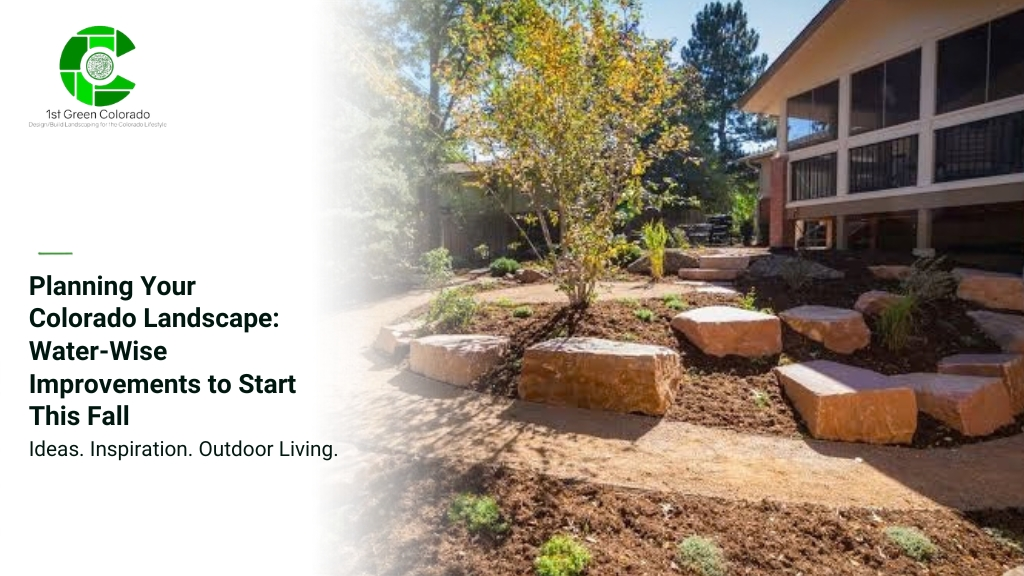
If your Colorado landscape struggled with water, heat, or underused spaces this summer, fall is a good time to take notice. Colorado fall landscaping is not only about preparing your yard for winter. It can also be the starting point for thoughtful water-wise improvements that make your landscape easier to maintain and more efficient with water.
By looking at how your landscape performed through summer, you can identify where water conservation could make a difference, which areas need redesigning, and what should stay as it is. This gives you a clearer starting point for planning water-wise landscaping before next year’s growing season.
Key Takeaways
- Use your landscape’s summer performance to identify where water, space, or maintenance is being wasted.
- Decide which areas should stay, change, or be redesigned before choosing individual plants.
- Group plants according to their water needs so irrigation can be managed more efficiently.
- Consider the entire outdoor space, including lawn, planting areas, hardscape, shade, privacy, and outdoor living.
- Starting the planning process in fall gives you time to develop a thoughtful landscape plan before spring installation.
Start With a Landscape Audit, Not a Plant List
One of the easiest mistakes to make is starting with plants.
You see a beautiful water-wise garden online, find a list of drought-tolerant plants and immediately start planning where to put them. But a plant that works beautifully in one part of Colorado may not be the right choice for another part of your property.
Start with the space itself.
Walk through your landscape and ask:
| What to look at | Questions to ask |
| Water use | Which areas needed the most irrigation? |
| Plant health | Which plants struggled despite regular care? |
| Lawn | Which areas are genuinely used? |
| Sun and shade | Which areas become particularly hot or dry? |
| Soil | Are there areas where plants consistently struggle? |
| Drainage | Does water collect or run off in certain locations? |
| Outdoor living | Which spaces do you actually spend time in? |
| Maintenance | Which areas take more work than they are worth? |
You do not need to solve every problem immediately. The purpose of this exercise is to identify patterns.
For example, if one section of lawn is rarely used but requires frequent irrigation, that could become a candidate for redesign. If a planting bed repeatedly struggles because of intense afternoon sun, the answer may involve changing the planting strategy rather than simply replacing the plants.
Identify Where Your Landscape Needs Improvement
Once you have a better understanding of your property, look at where the biggest opportunities are.
Some improvements may be relatively simple. Others may require a larger redesign. The important thing is to identify the areas that will make the biggest difference to water use, maintenance and how you use the space.
Start by separating your landscape into three categories:
Keep: Elements that already work well, such as mature trees, useful lawn areas, established planting or a patio that gets regular use.
Modify: Areas that function but could be more efficient or useful. This could include an oversized lawn, a planting bed with the wrong plants for its conditions, or a space that needs better shade or privacy.
Redesign: Areas that consistently create problems or serve little purpose. An underused section of turf or a high-maintenance planting area may have more potential in a different form.
This gives you a starting point for deciding where to invest first.
You may find that your entire landscape does not need to change. A few well-planned improvements could address the biggest issues.
Decide What Kind of Water-Wise Improvements Make Sense
Once you know which areas need attention, think about what you actually want to change.
Water-wise landscaping can take several forms, and the right approach will depend on your property.
You might reduce turf in an area that is rarely used. You could replace struggling plants with species better suited to their growing conditions. You might reorganize planting beds so plants with similar water needs are grouped together.
In some cases, the biggest opportunity may be a broader landscape redesign.
For example, an underused lawn could become a combination of planting areas and a small outdoor seating space. A disconnected planting bed could be redesigned to work with an existing patio. A difficult-to-maintain area could be simplified without making the landscape feel sparse.
The point is to choose improvements based on the problems you identified rather than making changes simply because a particular landscape trend looks appealing.
Design Around How You Actually Use Your Yard
Water efficiency is important, but your landscape still needs to support your lifestyle.
Think about what you want to do outside.
Do you spend summer evenings on the patio? Would more shade make the backyard comfortable for longer? Do you need additional privacy? Is there a part of the yard that your family rarely uses?
These questions can influence your landscape plan just as much as water requirements.
For example, you may decide that keeping a smaller area of lawn makes sense because it is used regularly, while converting an unused section into a lower-water planting area makes more sense.
The result is a landscape where water is being used intentionally, while the space still feels comfortable and functional.
Group Your Landscape by Water Needs
Once you know which areas you want to keep or redesign, think about how different parts of the landscape should be watered.
This is where hydrozoning can become useful.
The basic idea is to group plants with similar water needs together. Instead of treating the entire property as one watering zone, you can create areas with different irrigation requirements.
For example, your landscape might include:
- A regularly irrigated area around an outdoor living space
- A lower-water planting area
- A section with established shrubs that needs less supplemental irrigation
- Areas that require little or no supplemental irrigation
This approach can make irrigation more efficient because each area can be managed according to its actual needs.
It also changes how you approach plant selection. Instead of asking, “Which drought-tolerant plants do I like?” you can ask, “Which plants make sense together in this part of my property?”
That small shift can lead to much more thoughtful water-wise landscaping.
Look Beyond Plants When Planning Improvements
A water-wise landscape is not necessarily created by replacing one plant with another.
Sometimes the bigger opportunity is in the layout.
Look at the relationship between your lawn, planting beds, patios and other outdoor areas. Could an oversized lawn be reduced? Could an unused section become a seating area? Could planting beds be reorganized around an existing tree?
You might also discover opportunities to introduce shade, improve privacy or create a more functional outdoor living area.
This is why it helps to think about the landscape as one connected space. Changing one element can affect another. Reducing turf could create room for a patio. Adding a tree could change the growing conditions for nearby plants. Moving a planting bed could affect irrigation coverage.
Planning these relationships before making individual changes can help you avoid solving one problem while creating another.
Plan for a Landscape That Works Beyond One Season
As you plan improvements, think beyond the way your landscape looks in July or August.
Colorado landscapes experience significant seasonal changes, so your plan should consider how the space will look and function throughout the year.
That could mean incorporating:
- Evergreen structure
- Different plant heights and textures
- Plants with different flowering periods
- Ornamental grasses
- Trees that provide shade and visual structure
- Hardscape elements that remain useful throughout the year
You do not need every part of the landscape to look the same in every season. The goal is to create enough variety and structure that the space continues to feel intentional as the seasons change.
Turn Your Ideas Into a Fall Landscape Plan
At this point, you should have a clearer idea of what is working, what needs attention and what you would like to change.
Now turn those observations into a simple plan.
1. List the problems you want to solve
Start with the areas that use too much water, require excessive maintenance, perform poorly or are not being used effectively.
2. Mark what you want to keep
Identify mature trees, useful lawn areas, established plants, patios and other features that already work well.
3. Prioritize your improvements
You may not need to tackle everything at once. Decide which changes would have the biggest impact on water use, functionality or maintenance.
4. Set a realistic budget
Knowing what you are comfortable investing can help determine whether you should complete the project in one phase or spread it across several seasons.
5. Decide what needs to happen first
Some improvements may be connected. For example, changing the landscape layout could affect planting and irrigation decisions. Planning those elements together can prevent unnecessary rework.
6. Create a spring implementation plan
Once you know what you want to accomplish, you can determine what needs to be designed, sourced or scheduled before the next growing season.
The advantage of doing this work in fall is that you have time to think through these decisions instead of making them quickly once spring arrives.
Should You Check for Rebates Before Starting?
Once you know which improvements you want to make, it is worth checking whether your local water provider offers incentives that could support the project.
Colorado has a range of local water-efficiency programs, but eligibility, funding and available incentives vary by provider. A program should support your landscape plan, rather than determine what you do with your property.
Check the current program details before budgeting around a rebate. Funding can change, and some programs may have application windows or specific requirements.
The better approach is simple: plan the landscape first, then see whether an available program can help offset part of the cost.
When is Professional Landscape Design Worth Considering?
A few small changes may be easy to plan yourself. But if you are changing several connected parts of your property, professional landscape design can help bring the entire plan together.
A landscape professional like 1st Green Colorado can evaluate the relationship between planting, irrigation, lawn, hardscape and outdoor living areas before work begins.
That matters when one decision affects another.
For example, reducing turf may create an opportunity for a new seating area. Changing a planting bed may require irrigation adjustments. Adding trees could affect the amount of sun available to plants underneath them.
A coordinated plan can help you make these decisions together rather than treating each improvement as a separate project.
It can also help turn a list of ideas into a practical plan with clear priorities, materials, budget considerations and installation phases.
Start Planning Now for a Better Landscape Next Spring
You do not need to redesign your entire property this fall.
Start by paying attention to what your landscape showed you this year. Identify where water, space or maintenance could be used more effectively. Decide what is worth keeping, what needs to change and which improvements would make the biggest difference.
Then use those decisions to create a plan for spring.
When the next growing season arrives, you will have more than a list of plants or a collection of ideas. You will have a clearer vision for a landscape that uses water thoughtfully and works better for the way you live outdoors.
Conclusion
Fall is a good time to step back and see what your landscape needs. Use what you learned this summer to identify where water, space, or maintenance could be used more effectively.
With a clear plan for your water-wise improvements, you can make thoughtful changes this fall and head into spring with a landscape that works better for your home and lifestyle.
Frequently Asked Questions
Is fall a good time to plan water-wise landscaping in Colorado?
Yes. Fall gives homeowners an opportunity to evaluate how their landscape performed through summer and identify areas that used too much water, required excessive maintenance or were not being used effectively. It also provides time to plan improvements before the next growing season.
Does water-wise landscaping mean removing all the grass?
No. Water-wise landscaping does not require removing all turf. The better approach is to consider where the lawn provides a useful function and where another landscape treatment may make more sense based on water needs and how the space is used.
Can a water-wise landscape still include an outdoor living area?
Yes. Water-wise landscaping can include patios, seating areas, shade, privacy features and other outdoor living elements. In fact, planning around how you use the space can help you decide where lawn and higher-water planting areas are most valuable.
Should I plan my landscape myself or work with a professional?
Small changes can often be planned by homeowners. Professional landscape design can be particularly useful when you are changing several connected elements, such as lawn, planting areas, irrigation, hardscape and outdoor living spaces.